







Brazilian Indigenous Peoples Reject River Privatization in the Amazon
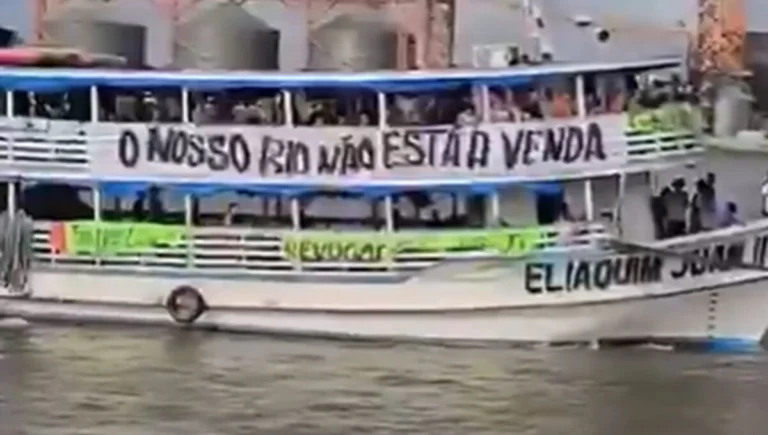
The sign reads, ‘Our river is not for sale.’ X/ @cenariumam
February 20, 2026 Hour: 11:11 am
🔗 Comparte este artículo
They set up a protest camp in front of the Cargill port in Santarem.
On Friday, Uruguayan journalist Raul Zibechi published an article in the online review From Below (“Desde Abajo”) warning about the possible privatization of rivers in Brazil.
RELATED:
Crops To Put 9.2 Million Ha of Amazon Rainforest at Risk
His report comes on Feb. 20, marking 30 days since about 600 people from 14 Indigenous communities in the Brazilian Amazon set up a protest camp outside the Cargill port in Santarem.
They are demanding that President Lula da Silva revoke Decree 12,600, which provided for dredging the Tapajos river and would transform its waters into a privatized waterway for transporting soybeans and other grains.
Although the Brazilian government backed away from the dredging days ago, it continues to include the Tapajos, Madeira River and Tocantins River rivers in the National Privatization Program.
This means that large multinational agribusiness corporations will be involved in managing waterways totaling 280 kilometers on the Tapajos River alone, which is the main tributary of the Amazon River.
The text reads, “Waving a banner that read ‘Brazil Is Not a Colony,’ Indigenous communities from the Baixo Tapajos region occupied a soybean tanker belonging to the U.S.-based company Cargill. The Amazonian communities are denouncing the decree that permits dredging of the river, a measure that is impacting the ecosystem and life in the region.”
It also implies the construction of new private ports, turning the region into a river corridor without consultation with Indigenous peoples whose subsistence depends on ecosystems linked to the Amazon basin.
“Soybean and corn monocultures are destroying the Amazon, deforesting the rainforest, and poisoning the waters and the environment through the abuse of pesticides,” Zibechi wrote, noting that convoys of up to 35 barges to transport grains have already been built and that 41 ports along the Tapajos River are being planned.
Currently, mercury contamination from mining and the removal of the riverbed pose the greatest threats to Brazilian Indigenous peoples, who have also carried out blockades on access roads to Santarem’s airport over the past month.
Paradoxically, these policies — seen as contrary to the sustainability of highly sensitive ecosystems — are unfolding under a progressive government that includes Indigenous Peoples Minister Sonia Guajajara and other members of the Party of Socialism and Liberty.
“The conversion of the great Amazonian rivers into infrastructure-heavy waterways would guarantee the annihilation of Indigenous peoples living along their banks,” Zibechi warned, emphasizing that those communities are determined to defend their lives and dignity against the advance of global agro-capitalism.
“A Munduruku woman said: ‘White people see the river as merchandise; for us it is life.’ This is precisely what Indigenous peoples across geographies — from Wall Mapu to Mesoamerica — have been saying,” he concluded.
teleSUR/ JF
Source: Desde Abajo